

2026-08-28
Bruxism Management: A Night Guard Protects the Teeth, but What About the Force?
Written by Dr. Agatha Bis
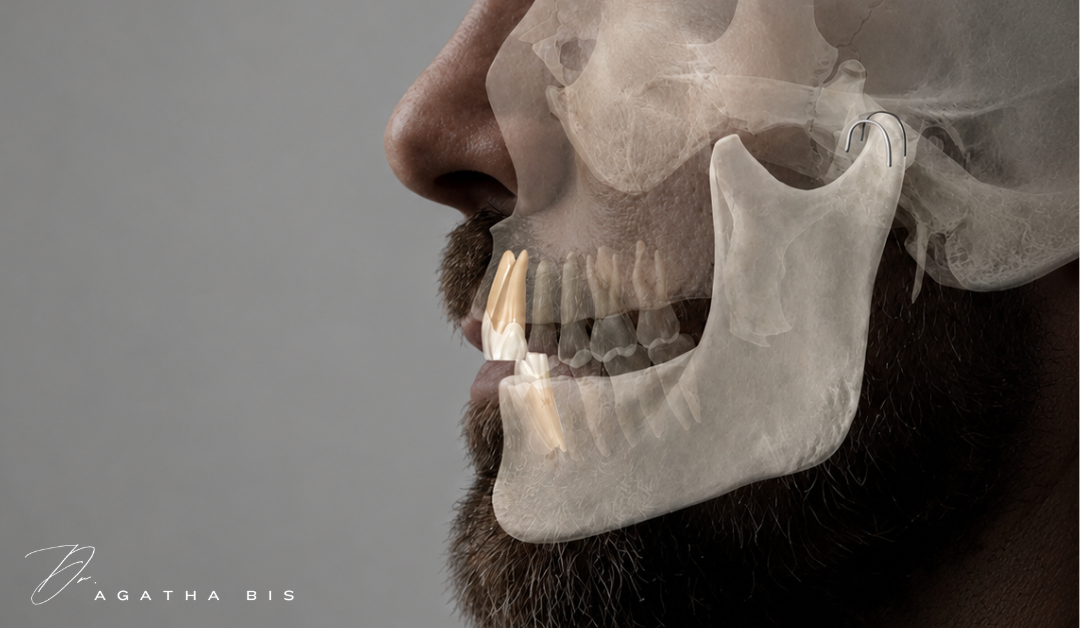
Most patients who receive a night guard are responding to a very real clinical signal.
The dentist sees worn enamel.
The incisal edges are beginning to chip.
A restoration has fractured.
The patient wakes up with sore jaw muscles.
Or their partner hears them grinding at night.
There is clearly something happening.
So we make a night guard.
The logic is straightforward: if the upper and lower teeth cannot contact each other directly, we can reduce the physical damage caused by grinding.
And that is true.
A night guard can protect the tooth surfaces.
But I think there is an important distinction we need to make in bruxism management.
Protecting the teeth is not the same as controlling the force.
The Barrier Solves One Part of the Problem
If a patient is grinding heavily, placing material between the teeth means enamel is no longer grinding directly against enamel.
If the patient has veneers, crowns or other restorations, an appliance may also help protect those surfaces from direct contact with the opposing dentition.
That can be very valuable.
But the muscles that generate the force are still there.
If the patient continues clenching hard against the appliance throughout the night, the physical barrier may reduce tooth wear while the masticatory system continues to carry significant load.
This is where I think we sometimes declare success too early.
The teeth look better.
The porcelain is protected.
The guard shows the wear instead of the dentition.
But how does the patient feel?
Listen to the Muscles
One of the most useful questions you can ask is also one of the simplest.
"How does your jaw feel when you wake up?"
If the patient says it feels more relaxed, that is useful information.
If they tell you it feels tighter, more fatigued or more painful after wearing the appliance, that is also useful information.
Do not separate the symptom from the treatment.
The appliance has changed something in the system.
Now we need to understand what.
This Matters Even More After Restorative Dentistry
Think about the patient who has already demonstrated that they can generate enough force to wear or fracture their natural teeth.
Now we restore them.
Maybe we place veneers.
Maybe crowns.
Maybe extensive posterior restorative work.
The work is beautiful.
Then we give them an appliance because we want to protect what we have created.
Again, that is logical.
But the restoration did not remove the force.
The guard did not remove the force.
The patient still brings the same neuromuscular system to the new dentistry.
That is why I believe dentists who are doing restorative dentistry need to become much more comfortable thinking about muscles, joints and mandibular position.
We cannot only think about the ceramic.
Why Restorations Keep Breaking
When restorations repeatedly fail, the instinct is often to look at the restoration.
Was the material strong enough?
Was there enough thickness?
Was the bonding adequate?
Was the preparation appropriate?
Those are all legitimate questions.
But if the same patient continues fracturing dentistry, I also want to look at the pattern of force.
How are they closing?
Where are they loading?
What does their occlusion look like?
What are their muscles doing?
What is happening at the temporomandibular joints?
A restoration exists inside that system.
If we only repair the damaged piece without understanding why it was repeatedly overloaded, we may find ourselves treating the same consequence again.
The Night Guard Becomes Part of That System
Once you place an appliance into the mouth, it is no longer just a piece of protective plastic.
It becomes the surface the patient may clench against for hours every night.
That means I want to know what material we have chosen.
I want to know where the mandible is supported.
And I want to know whether all of the teeth are contacting the appliance evenly.
If those factors are not correct, the guard may protect the porcelain while introducing a different problem.
Nocturnal Bruxism Treatment Needs Better Questions
When we talk about nocturnal bruxism treatment, it is tempting to ask:
"Which night guard should I make?"
I would rather ask:
"What is this patient doing, and what am I trying to change?"
If the objective is only to keep opposing tooth surfaces apart, an appliance can accomplish that.
But if the patient also has muscle pain, joint symptoms, clicking or an unstable mandibular position, then our treatment planning needs to go further.
The worn tooth is the signal.
The chipped crown is the signal.
The tight muscle is the signal.
The click is the signal.
The job of the dentist is to understand how those signals fit together.
Protect More Than the Porcelain
When I protect a restorative case, I am not only thinking about how to stop the ceramic from contacting the opposing arch.
I am thinking about the patient carrying that restoration.
What force are they generating?
Where is that force going?
How is the mandible being supported?
What are the joints experiencing?
That is how we make restorative dentistry more predictable.
A night guard can be an important part of that strategy.
But it should never become a substitute for understanding the system that damaged the teeth in the first place.
Before protecting the restoration, understand the forces that may be putting it at risk. TMJ Essentials helps dentists connect wear, muscles, joint position, and occlusion to more predictable treatment planning.