

2026-07-15
When Patients Arrive With “Dr. Google”: How Misinformation Is Changing Dentistry
Written by Dr. Agatha Bis
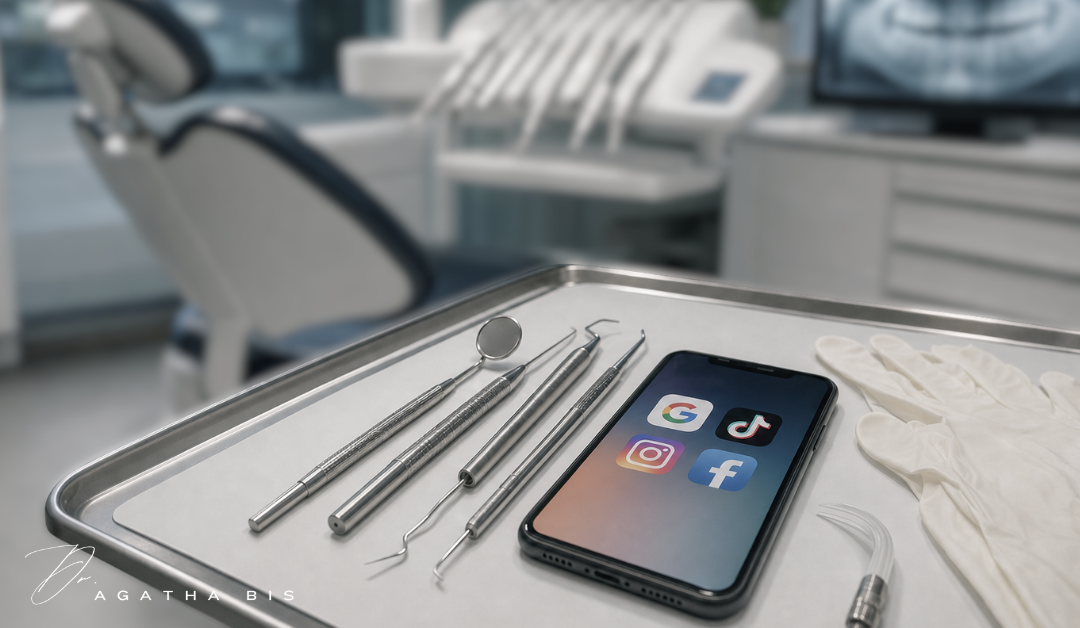
The modern dental consultation often begins before the patient enters the office.
They have searched symptoms online. Watched videos. Compared treatment options. Read reviews. Saved social media posts.
Sometimes they arrive informed.
Sometimes they arrive misinformed.
Often, they arrive convinced.
This has changed dentistry.
For decades, the dentist was the primary source of oral health knowledge. Today, the dentist is one voice competing with influencers, short videos, dental myths, product marketing, and algorithm-driven advice.
The patient may trust a thirty-second video more than a thirty-year clinician.
That creates a new kind of stress in the operatory.
The dentist is no longer only diagnosing and treatment planning. They are also correcting misinformation, rebuilding trust, defending clinical reasoning, and trying not to sound dismissive.
A simple recommendation can be interpreted as a sales pitch. A refusal to provide inappropriate treatment can become a negative review. A comprehensive diagnosis can feel “too much” to the patient.
This is exhausting.
It also affects clinical care.
Dental misinformation is not harmless. Patients may delay necessary treatment, request procedures that are not appropriate, refuse diagnostic steps, or believe that complex symptoms have simple fixes.
In TMJ and bruxism cases, this becomes especially dangerous.
A patient with jaw pain may believe one injection will “solve” the issue. A patient with clicking may ignore joint changes because a video told them it is normal. A patient with broken restorations may ask for a stronger crown when the real problem is force, parafunction, or occlusal instability.
The dentist sees the system.
The patient may only see the symptom.
That gap must be managed carefully.
The article “The Erosion of Clinical Autonomy and the Rise of Defensive Practice” describes the rise of the “digitally armed patient.” This does not mean patients are the enemy. Patients are scared, overwhelmed, and trying to make sense of their symptoms.
The problem is that misinformation can make them confident in the wrong direction.
For dentists, the answer is not to argue.
The answer is to lead.
That means replacing confrontation with structure. Instead of saying, “That is wrong,” the dentist can say, “I understand why that looks like the issue. Let me show you what I am seeing clinically.”
Instead of rushing into treatment options, the dentist can slow down the diagnosis.
Instead of defending the fee, the dentist can explain the risk of treating only the visible problem.
Patients need to understand that dentistry is not just repair work.
A tooth can be restored beautifully and still fail if the forces are not understood. A nightguard can be made and still not address the reason the patient clenches. A symptom can improve and still not mean the system is healthy.
This is where dentists can regain trust.
Not by overwhelming patients with jargon, but by making the invisible visible.
Show the wear. Explain the muscle tenderness. Connect the fracture history. Discuss the bite instability. Clarify what is known, what is suspected, and what needs further evaluation.
Patients are more likely to trust a dentist when they can follow the logic.
Misinformation will not disappear.
But dentists can become better translators of clinical reality.
In a world where patients arrive with answers, the dentist’s job is to bring them back to better questions.
If this reflects what you are seeing in practice, the full article goes deeper into the pressures reshaping modern dentistry.
Read it here: The Erosion of Clinical Autonomy and the Rise of Defensive Practice
References:
American Association of Endodontists. Mis/Disinformation in Dentistry: A Growing Threat to Patient Care and Professional Credibility.
American Dental Association. Online Dental Misinformation. Dental Sound Bites, Season 6, Episode 8.
Exploring How People Interact With Dental Misinformation on Social Media: A Cross-Sectional Study. National Library of Medicine / PMC.
Infodemics and health misinformation: a systematic review of reviews. National Library of Medicine / PMC.
DrBicuspid.com. The role of social media misinformation in dental pain.