

2026-07-10
The Hidden Cost of Losing Clinical Autonomy in Dentistry
Written by Dr. Agatha Bis
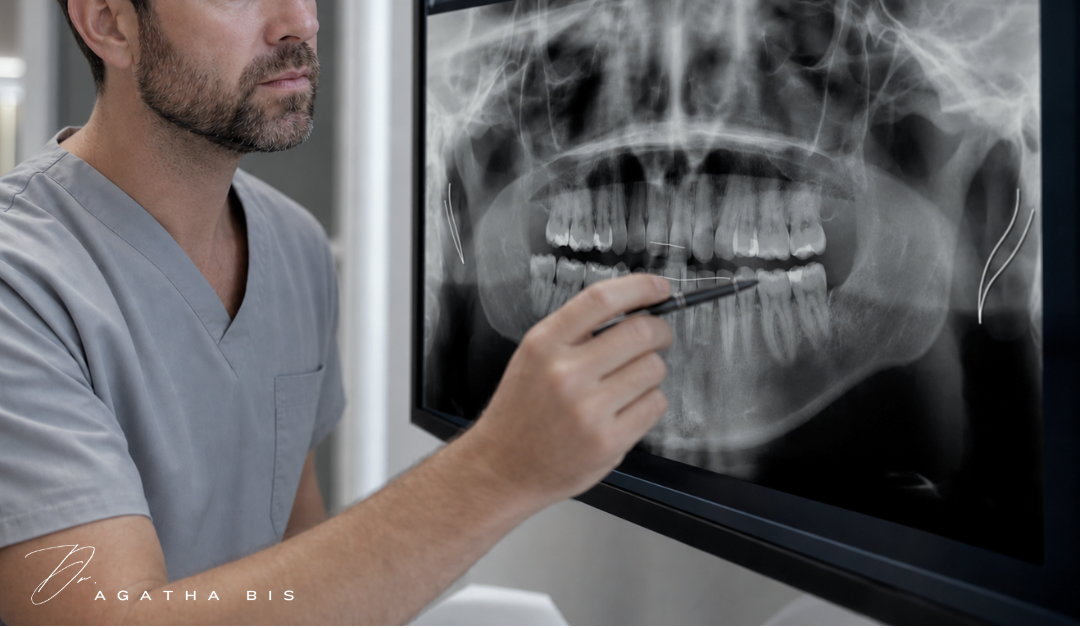
Clinical autonomy is not ego.
It is not a dentist wanting to do whatever they want.
Clinical autonomy is the ability to use training, experience, diagnosis, judgment, and evidence to decide what a patient actually needs.
Without it, dentistry becomes mechanical.
A patient presents with a fractured molar. The simple answer is a crown. But the clinical answer may be more complicated.
Why did the tooth fracture? Is there a parafunctional habit? Is there generalized wear? Are the muscles overloaded? Is there a history of repeated restorations? Is the occlusion stable? Is this one tooth failing, or is the whole system under strain?
That is the difference between procedural dentistry and diagnostic dentistry.
The concern today is that many dentists are being pushed away from deeper diagnosis. Not because they do not care. Not because they do not know better. But because the modern practice environment makes broader clinical judgment feel risky.
Dentists are under pressure from many directions at once.
Patients arrive with information from social media, often already convinced of what they need. Insurance limitations influence what patients will accept. Online reviews can punish a dentist for saying no, recommending comprehensive care, or refusing treatment that is not appropriate. Regulators define standards that are necessary, but dentists may experience those standards as rigid thresholds rather than supportive frameworks.
Add rising overhead, staffing challenges, student debt, and burnout, and the result is a clinician who may feel safer doing less.
But “less” is not always more conservative.
Sometimes less is simply less complete.
In TMJ, occlusion, bruxism, and restorative instability, the danger is not only overtreatment. Undertreatment can also harm patients.
If a dentist restores one tooth without understanding why it broke, the next failure may already be forming. If muscle pain is treated only as a local symptom, the underlying load pattern may remain. If a nightguard is made without diagnosis, it may manage symptoms while leaving the system unchanged.
Clinical autonomy matters because complex patients need complex thinking.
The article “The Erosion of Clinical Autonomy and the Rise of Defensive Practice” makes a powerful point: modern dentistry has moved from a profession centered on clinical judgment toward one increasingly centered on compliance, reputation, and survival.
That shift changes the emotional center of the profession.
Fear becomes part of the treatment plan.
Dentists feel this every day.
They feel it when they hesitate to document what they really see. They feel it when they avoid a difficult conversation because the patient may perceive it as “selling.” They feel it when they know a case requires a broader workup but worry the recommendation will be misunderstood.
They feel it when they choose the most defensible path instead of the most complete one.
The solution is not to reject regulation or patient protection.
The solution is to strengthen clinical reasoning.
Dentists need to be able to explain why a case is not just a single-tooth problem. They need frameworks for connecting symptoms, occlusion, muscles, joints, parafunction, airway, and restorative risk. They need education that supports diagnosis before treatment.
And they need a professional culture where asking better questions is valued as much as doing faster procedures.
Clinical autonomy is not a luxury.
It is the foundation of responsible care.
When dentists lose it, patients do not get safer dentistry. They get narrower dentistry.
This blog is based on our full resource, The Erosion of Clinical Autonomy and the Rise of Defensive Practice.
Read the full article here: The Erosion of Clinical Autonomy and the Rise of Defensive Practice
References:
American Dental Association Health Policy Institute. Practice Ownership Among Dentists Continues to Decline. American Dental Association, 2023.
American Dental Association Health Policy Institute. Practice Ownership Trends in Dentistry: A New Look at Old Data. American Dental Association, 2025.
Dental education and practice: past, present, and future trends. National Library of Medicine / PMC.
Maragha, T., et al. Dentists’ Mental Health: Challenges, Supports, and Promising Practices. National Library of Medicine / PMC, 2024.
Evaluation of dentists’ malpractice fears and defensive dentistry attitudes: a scale development. National Library of Medicine / PMC.