
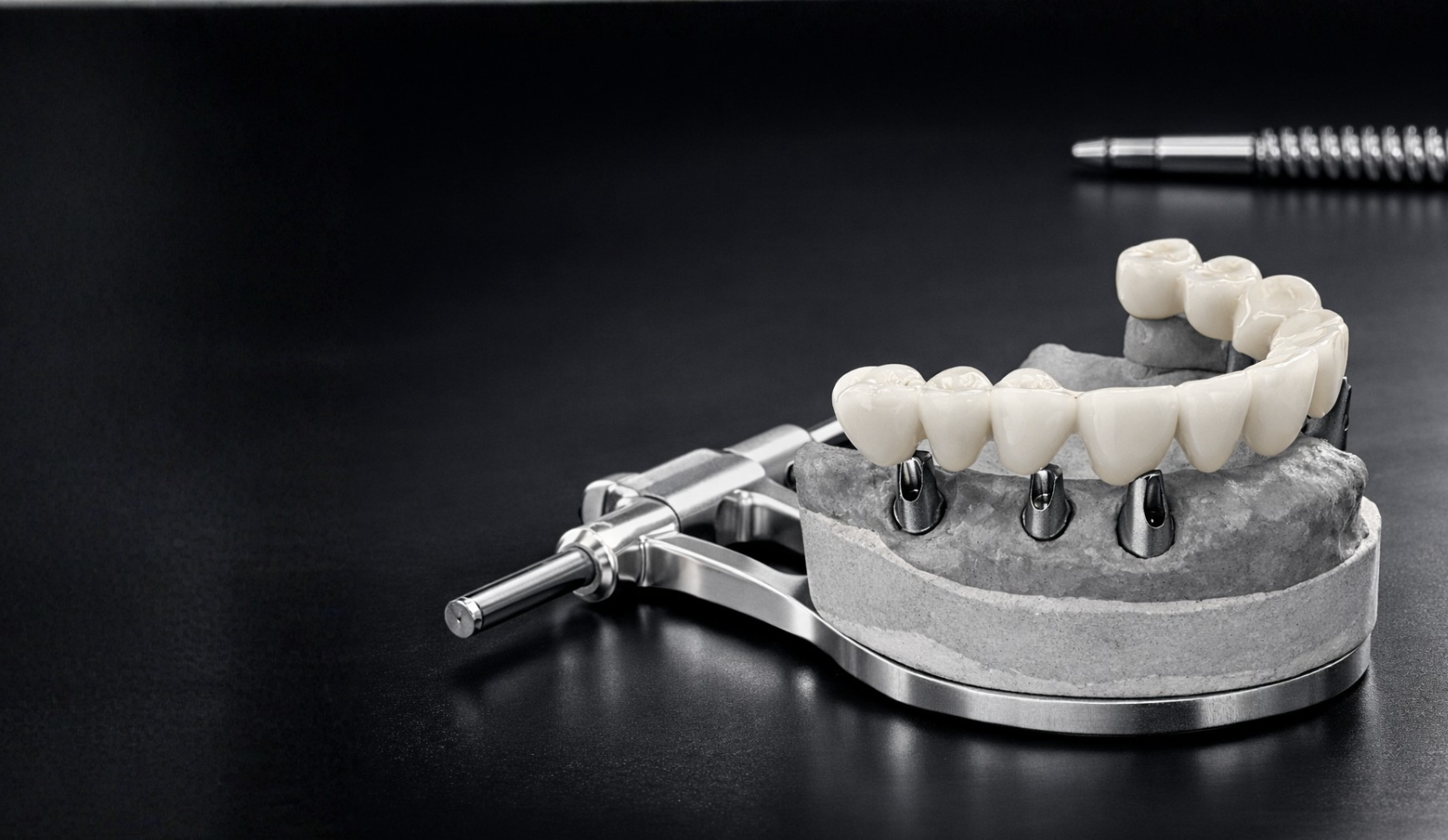
Implant Forces, TMJ Consequences:
T h e I m p l a n t O c c l u s i o n F r a m e w o r k R e d e f i n e d
September 23, 2026 | 1 CE Credit
CE dental courses - Courses for dentists - TMJ Course
Implant Forces, TMJ Consequences: The Implant Occlusion Framework Redefined
Implants do not behave like natural teeth. They lack periodontal ligament receptors, they respond differently to lateral forces, and they distribute load in ways that can influence both muscle activity and joint stability. When implant occlusion is designed without considering these biomechanical differences, patients may experience joint strain, bite changes, and even TMD symptoms that appear long after implant placement.
This webinar gives dentists a clear understanding of how implant forces interact with the TMJ system and why certain implant cases are more likely to trigger instability. You will learn how to design occlusion that minimizes overload, how to identify early signs of joint strain, and how to plan implant cases with functional pathways and TMJ health in mind.
Real clinical examples and step by step diagnostic sequences help clinicians prevent complications, reduce stress on both the implant and the joint, and protect long term treatment success.
Learning Objectives:
Understand key differences between natural tooth occlusion and implant occlusion.
Identify early signs of TMJ strain related to implant loading.
Recognize implant cases that may increase the risk of joint instability.
Apply occlusal adjustments that protect both implants and the TMJ.
Evaluate functional loading patterns to prevent TMD complications.
Integrate TMJ assessment into implant treatment planning.
Date: September 23, 2026
Time: 8:00PM EST
Format: Webinar
Cost: Free
CECredit: 1
Presenter: Dr. Agatha Bis

Instructor Qualifications:
Dr. Agatha Bis has over 30 years of clinical experience with a special focus on TMJ & TMD management.
Known for her expertise in both, diagnosis and treatment, Dr. Bis is a leader in TMD education and dedicated to improving patient outcomes through advanced knowledge and skills.