

2026-04-08
The 2 mm Slide That Predicts Instability
Written by Dr. Agatha Bis
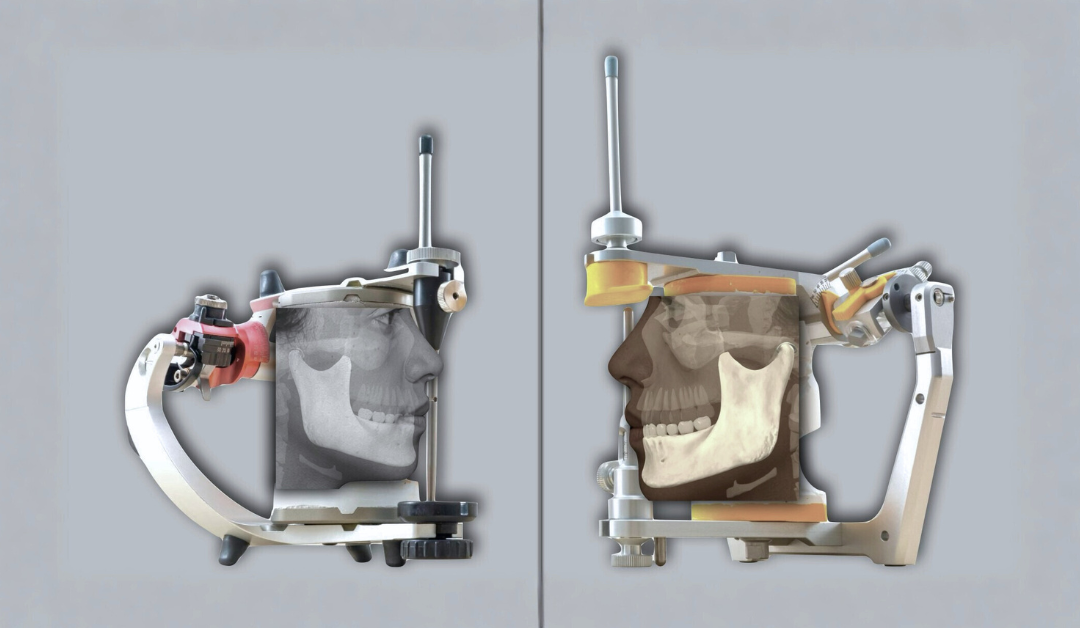
When MIP and the Neuromuscular Position Don’t Match
One of the biggest mistakes in dentistry is assuming that the position of maximal tooth contact is the position the jaw wants to be in.
Many dentists restore teeth in MIP simply because that is where the teeth meet. But if the muscles are trying to guide the mandible somewhere else, that restoration can lock the system into conflict.
This is where measuring the “slide” becomes clinically important.
Wear pattern analysis becomes truly useful when you move from simply noticing wear to quantifying the discrepancy between where the teeth meet and where the system is most comfortable.
Two Positions You Need to Understand
When evaluating occlusion, there are two coordinates to consider.
MIP (Maximum Intercuspation)
This is the position where the teeth have the most contact. In many patients, especially retruded patients, this position is not physiologic. It may be a position the muscles have to force the jaw into.
Neuromuscular target (Myocentric position)
This is a position of minimal muscular strain. Clinically, it is often approximated by wear facet alignment, where wear patterns indicate where the mandible repeatedly wants to function.
The difference between these two positions is what we call the slide.
Why the Size of the Slide Matters
Small discrepancies can sometimes be tolerated.
But once the discrepancy approaches 2 mm or more, the system often enters a state of chronic conflict.
In other words, the muscles are repeatedly trying to guide the mandible away from where the teeth are forcing it to close.
Over time this creates predictable biomechanical consequences.
What Happens When the Slide Is Large
When the discrepancy becomes significant, several things tend to occur.
Persistent Muscle Hyperactivity
The muscles cannot fully relax because they are constantly pulling the mandible into maximal tooth contact.
Pathologic Joint Loading
As the mandible shifts into MIP, the condyles may load more posteriorly into the disc or retrodiscal tissues. This increases the risk of internal derangement and degenerative joint changes.
Long-Term Compensation… Then Breakdown
Many patients compensate for years.
Then something changes:
stress
whiplash
orthodontics
restorative dentistry that locks the bite further into the wrong position
That is often when symptoms begin.
How to Measure the Slide
You do not need complicated equipment to document this.
During facet alignment:
Measure the horizontal shift - the overjet difference between MIP and the aligned position.
Measure the vertical opening - how much the patient must open from MIP to reach that aligned position.
Document photographs and notes in your diagnostic records.
This measurement gives you an objective way to evaluate risk before treatment begins.
The Clinical Message
If a patient presents with a significant slide, they should not be approached like a routine restorative case.
Before committing to irreversible dentistry, you should first confirm that the system can function in a stable and comfortable position.
A crown that looks perfect on the model can still fail clinically if it is built into the wrong coordinate.
Final Thought
Dentistry often focuses on how teeth fit together.
But long-term stability depends on something more important:
whether the teeth and the neuromuscular system agree on where the mandible should be.
When they do not agree, and the discrepancy approaches 2 mm, you are often looking at a system that is already under strain.
Ignoring that measurement can turn even excellent dentistry into a problem.