

2026-05-06
The Bruxism - Airway Connection Every Dentist Should Understand
Written by Dr. Agatha Bis
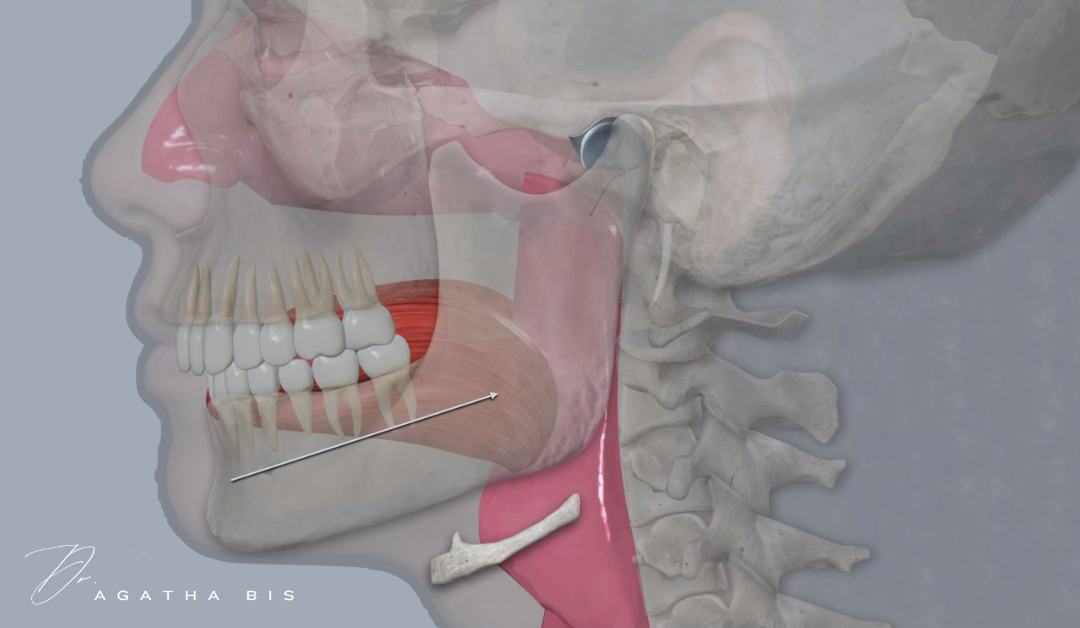
Many dentists were trained to view bruxism mainly through its visible consequences: tooth wear, fractures, sore muscles, abfractions, and broken restorations.
But bruxism may be more than a dental habit. In some patients, it may be connected to airway function.
That is why the bruxism-airway connection matters. Research has shown a strong relationship between sleep bruxism and respiratory events, raising the possibility that jaw muscle activity may sometimes play a protective role during compromised breathing.
That changes the clinical conversation.
If bruxism is part of an adaptive response to airway obstruction, then treating it only as a wear problem may be too narrow. A patient may grind less after treatment, but the underlying breathing issue may still be present. In some cases, reducing the visible behavior without understanding the cause may mask a more important problem.
This is why dentists should stop viewing bruxism as an isolated finding.
When a patient presents with heavy wear, fractured dentistry, morning fatigue, headaches, enlarged masseters, or chronic muscle tension, the question should not only be how do we protect the teeth? It should also be what is driving the parafunction? The answer may involve stress, occlusal instability, central mechanisms, or joint adaptation, but airway should also be part of the differential.
This is especially important when thinking about sleep bruxism and OSA. Not every patient who grinds has obstructive sleep apnea, but some may. If airway compromise is missed, treatment can become incomplete, and the broader health implications of undiagnosed sleep-disordered breathing may remain unaddressed.
For dentists, that makes airway screening part of responsible diagnosis. Dentists airway screening bruxism is not about overcomplicating care. It is about recognizing when bruxism may be part of a larger functional pattern that deserves closer attention.
It also matters in restorative treatment. If a worn case is restored without understanding whether the parafunction is compensatory, protective, or centrally driven, the new dentistry may be placed back into the same unresolved system that damaged the original teeth.
That is why TMJ airway dentistry cannot separate airway, occlusion, and mandibular behavior too neatly. In real clinical practice, those systems often overlap.
The better way to think about bruxism is this: it is information.
It is a signal from a system under demand. Sometimes that demand is emotional. Sometimes structural. Sometimes neurologic. And sometimes it is airway-related. The role of the dentist is not only to manage the damage, but to understand the pattern behind it.
When bruxism is viewed that way, airway screening stops feeling like an extra step. It starts looking like basic diagnostic responsibility.
TMJ Whisperer Academy helps dentists think beyond symptoms and toward deeper clinical patterns in TMJ, occlusion, and restorative care.